
In professional agriculture, achieving a consistent, high quality yield depends on many factors. Crop variety, irrigation management, nutrition and pest and disease control are among the best known. Yet another factor often goes unnoticed, even though it directly affects both productivity and the efficiency of day to day work: the trellising system.
Trellising is more than a way to support plants. It brings together solutions designed to guide their growth, keep them stable throughout the growing cycle and make farm work easier. A well planned system improves access to plants, supports their development and allows tasks such as pruning, crop protection treatments and harvesting to be carried out more quickly and safely.
The system’s performance also depends on more than the quality of any one consumable. Trellising twine, clips, anchor bands and tying tools should be chosen with the expected crop duration and actual working conditions in mind, because every operation has different needs.
A greenhouse vegetable crop with a long growing season and vigorous plants calls for different solutions from an outdoor crop or an operation with a different level of mechanisation. Choosing the right materials from the start helps reduce problems during the season, minimise maintenance and avoid unnecessary replacement of consumables.
This guide examines the main factors to consider when choosing a trellising system, reviews the most widely used consumables and explains which mistakes to avoid to reduce maintenance costs and improve performance throughout the season.
In this guide, you will learn
- What a trellising system is and why it affects crop productivity.
- What to consider before choosing consumables.
- Which systems are commonly used today and when each is suitable.
- Which mistakes to avoid to reduce maintenance costs and improve performance throughout the season.
What is trellising and why does it matter
Trellising is a technique that gives plants a support system to guide their growth in a controlled way. Although its most visible purpose is to keep plants upright, it serves a much broader role.
For vertically growing vegetable crops such as tomatoes, cucumbers, peppers, aubergines and certain bean varieties, trellising helps distribute foliage, keep fruit off the ground and improve access for all cultivation tasks.
Without adequate support, the weight of plants and fruit can cause deformation, broken stems or disordered growth that makes maintenance and harvesting harder. A well designed system, by contrast, supports more balanced development and makes work easier.
Depending on the crop and method used, the system may include trellising twine, clips, anchor bands, tape or tying tools. Each has a specific role.
That is why the choice of system should be based on more than the price of each consumable. Mechanical strength, ease of installation and durability under sunlight all affect crop performance and the time spent on farm work.
Benefits of a good trellising system
Choosing the right materials and consumables does more than improve plant stability. It also affects work organisation, the durability of the installation and the profitability of the operation.
Better crop development
With adequate support, plants can grow in an orderly way, distributing their foliage more evenly and making more efficient use of available light.
Higher fruit quality
Keeping fruit off the ground helps reduce the risk of knocks, deformation and problems caused by excess moisture. Better light exposure and more even ventilation also support uniform crop development and help produce fruit with a more consistent appearance.
Easier harvesting
One of the benefits growers value most is better access.
When plants are properly trained, fruit is quicker to find and pick. Workers make fewer movements, avoid unnecessary walking and can maintain a steadier pace throughout the day.
On operations with thousands of plants, these small improvements in crop organisation add up to significant time savings.
Less plant damage
As the season progresses, the weight of the fruit increases and plants are subjected to greater mechanical loads.
A correctly installed trellising system distributes these loads more evenly and helps prevent broken stems, excessive leaning and damage during routine pruning, leaf removal or harvesting.
It also reduces the risk of placing unnecessary strain on consumables, extending their useful life and reducing repairs during the season.
Greater work efficiency
A good trellising system does more than hold plants in place: it makes all cultivation tasks more efficient.
When consumables are properly selected and work together as a complete system:
- initial installation is faster;
- less maintenance is needed;
- pruning and training take less time;
- crop protection treatments are easier to apply;
- harvesting is more comfortable and orderly.
Together, these benefits help optimise working time and reduce operating costs.
What should you consider when choosing a trellising system
Choosing a trellising system is more than selecting a particular twine or clip. The decision should begin with an assessment of the crop, working conditions and the operation’s objectives.
Although each operation has its own needs, several factors should be assessed before deciding which materials to use.
Crop type
The first consideration is the crop itself. Different species place different loads on the trellising system and follow different growth patterns. Some develop long, flexible stems; others impose greater loads because of fruit weight or need more frequent attention during the season.
Before choosing materials, it helps to ask:
- Will the plant grow very tall?
- Will it need to be trained repeatedly during the season?
- Will the weight of the fruit increase substantially as the crop develops?
- Will the system need frequent changes or adjustments?
Answering these questions helps you select a more suitable solution and avoid problems when the crop reaches full development.
Practical example
A long cycle tomato crop can remain productive for several months and carry a heavy fruit load. Other crops have shorter cycles or different growth habits. Although both need trellising, they place different demands on the consumables and the system’s durability.
The aim is not to use the strongest possible system in every case, but to select the one that best meets the crop’s actual needs.
Growing environment
The environment in which a crop grows also influences material selection.
Working in a greenhouse with stable conditions differs from working outdoors, where plants are exposed to the weather.
Greenhouse crops
Protected crops often have long growing seasons, vigorous plants and many interventions throughout the production cycle.
Under these conditions, the trellising system should offer:
- stability over long periods of use;
- easy training and adjustment;
- quick installation;
- convenience during maintenance.
Outdoor crops
In intensive operations, even small productivity gains can save a substantial number of working hours over the season. Outdoors, consumables are exposed to sunlight, rain, wind, sudden temperature changes and humidity. Materials should therefore be chosen to retain their properties throughout the season and perform consistently even after months of exposure to the elements.
Ignoring this can cause some consumables to age prematurely and require replacement before the crop cycle ends.
Expected crop duration
A common mistake is to use the same consumables without considering the length of the growing season. The needs of a crop lasting a few weeks differ considerably from those of a crop that remains in place for many months.
The longer the expected duration, the more important mechanical strength, UV resistance, the ability to maintain system tension and reliable performance under continuous use become.
Cost should therefore be considered as a whole. A more durable consumable can reduce replacements and problems, and prevent work interruptions once the crop is fully developed.
Technical tip
The true cost of a trellising system is not just its purchase price. Installation time, possible replacements during the season and hours spent on maintenance should also be considered. This approach helps you make more cost effective decisions over the long term.
Level of mechanisation
Some operations carry out most tasks manually, while others use tools to speed up repetitive work.
Manual installation may be sufficient for a small number of plants. As the cultivated area increases, however, productivity becomes a decisive factor.
Agricultural tying tools, for example, can speed up one of the crop’s most repetitive tasks: tying plants.
Their advantages include:
- faster work;
- consistent ties;
- less physical effort for workers;
- less fatigue during long working days;
- higher productivity.
Material quality and durability
When an operation installs thousands of metres of twine or uses tens of thousands of clips in a season, any problem can quickly multiply and consume a great deal of time.
Alongside price, it is therefore worth assessing mechanical strength, UV performance, ease of installation and manufacturing consistency.
In many cases, a higher quality consumable pays for itself by reducing replacements and maintenance hours.
Main trellising systems
Once you have established the criteria for choosing a trellising system, it helps to understand which consumables and tools are most widely used in professional agriculture and the role each plays.
Before looking at each solution in detail, this table summarises the general characteristics of the most common consumables.
| System | Main function | Main advantages | Typical applications |
| Trellising clips | Attach the plant to the twine | Quick installation, less handling of plants and consistent training | Vertically growing crops such as tomatoes, cucumbers and peppers |
| Anchor bands | Secure stems and shoots to wire | No knots needed, quick installation and consistent tension | Woody crops trained on trellises, such as vines and olive trees |
| Tubular plastic tying cord | Support plant growth | High strength, low weight and easy installation | All types of trellised vegetable crops |
| Agricultural tying tools | Automate tying plants to supports | Higher productivity, consistency and less physical effort | Operations with large numbers of plants |
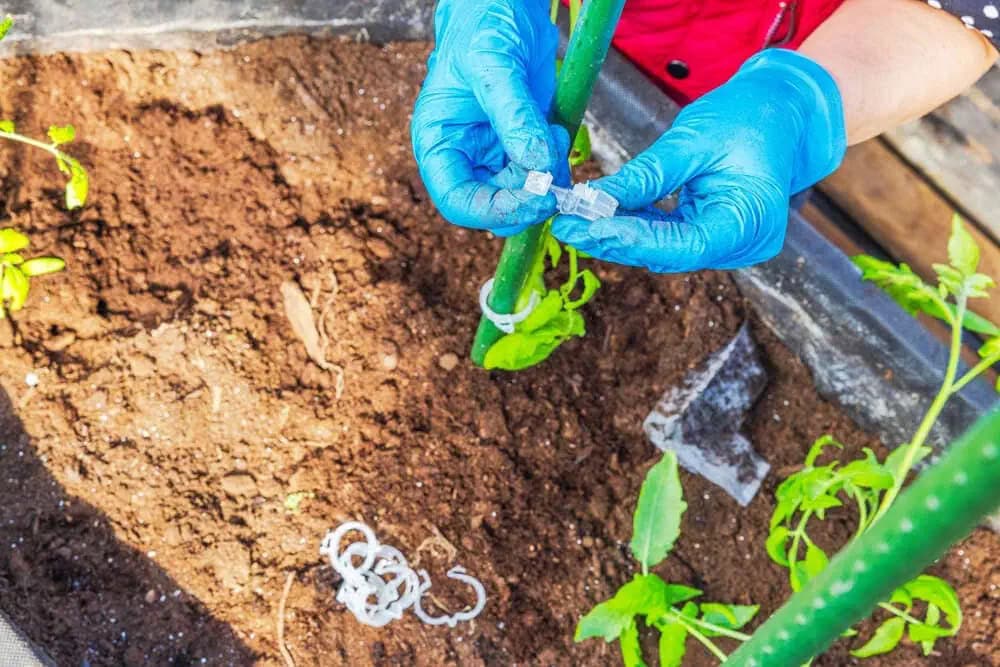
Trellising clips
Trellising clips are among the most widely used consumables for vertically growing vegetable crops.
They attach the plant’s main stem to the trellising twine, allowing it to grow in an orderly way without putting excessive pressure on the stem.
A clip may seem simple, but its design directly affects installation speed, crop stability and ease of maintenance.
By holding the stem securely, clips encourage more orderly growth and reduce the chance of the plant moving under the weight of fruit or during maintenance. Because no knots are needed, they also speed up work considerably when thousands must be installed during a season.
When should you use them
Clips are particularly suitable when:
- growing vertically trained crops;
- training plants frequently;
- seeking quick, consistent installation;
- seeking to reduce direct handling of plants.
On professional operations, where tens of thousands of clips may be installed in one season, an ergonomic design can also help reduce worker fatigue.
Technical tip
The clip diameter should suit the plant’s expected growth and the twine used. A clip that is too small may put unnecessary pressure on the stem, while one that is too large may provide less stability.
Anchor bands
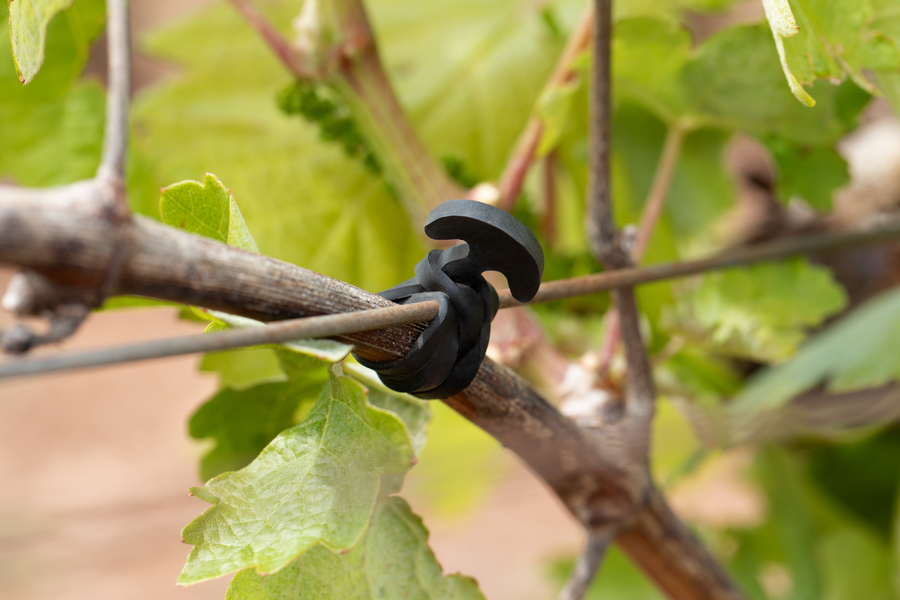
Anchor bands are a tying solution designed to secure stems and branches in vineyards, olive groves and other crops trained along trellises or wire lines, quickly and securely without damaging the plant. Their design allows shoots to be attached to wires, stakes or other training structures, providing a firm hold that accommodates the crop’s natural growth.
Their elasticity allows them to adapt as the plant grows through the different stages of the season, avoiding excessive pressure on plant tissue and reducing the risk of damage.
They are also made from 100% synthetic rubber, a high quality material with excellent weather resistance that retains its performance under sunlight and varying weather conditions.
What are their main advantages
Key benefits include:
- quick and easy installation without tools;
- excellent adaptability thanks to the rubber’s elasticity;
- high resistance to weather and varying climatic conditions;
- a range of sizes to suit different crops and training systems.
These features reduce the time spent tying plants and support more efficient, consistent training throughout the season.
Tubular plastic tying cord
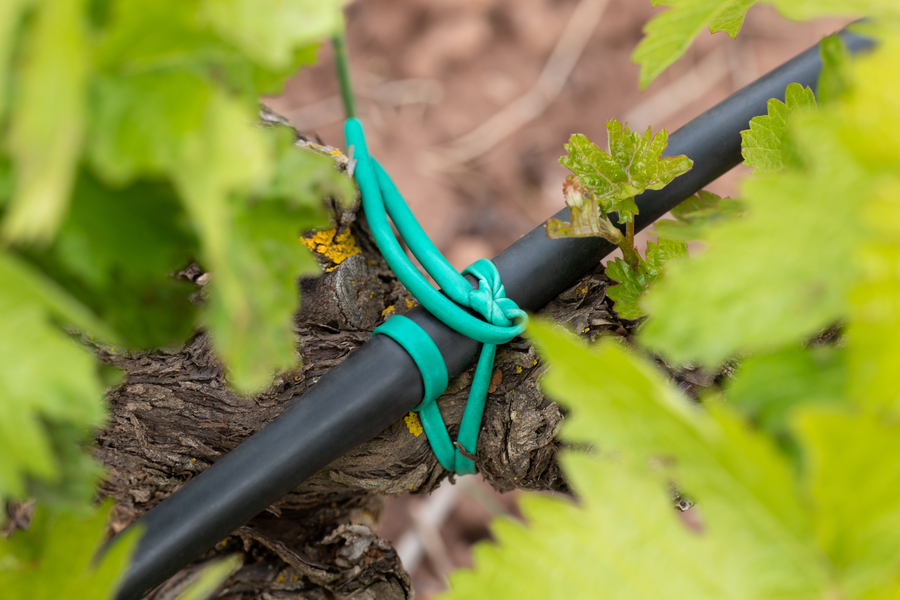
Tubular plastic tying cord, also known as tubular tying material, is a consumable designed for manually tying plants in vineyards, olive groves and other crops. Its flexibility allows shoots and branches to be secured to wires, stakes or other training structures, providing a firm hold without damaging the plant.
It is made from high quality PVC, a weather resistant material that retains its properties under sunlight, humidity and temperature variations. Its tubular design also provides flexibility and makes tying easier while accommodating the plant’s natural growth throughout the season.
It is available in various formats, including skeins, balls and pre cut lengths, so each operation can choose the most suitable option.
Professional agricultural tying tools
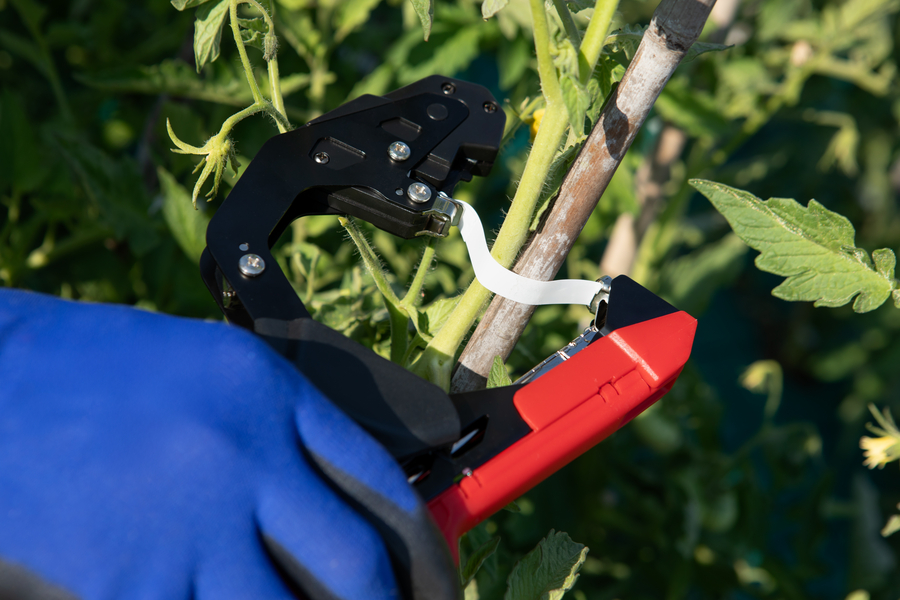
Agricultural tying tools are designed to attach plants to supports, stakes or training wires quickly, consistently and securely.
Their lightweight, ergonomic design makes day to day work easier in greenhouses and outdoors. They are particularly suitable for operations that require a large number of ties.
As well as improving productivity, they help keep ties more consistent, supporting more orderly crop development.
When is an agricultural tying tool worthwhile
They are commonly used in intensive vegetable crops and are also useful in nurseries, greenhouses and outdoor operations where tying is carried out continuously.
One of their main benefits is time savings: they allow workers to tie between three and four times as many plants as manual tying, considerably reducing the time spent on this task.
Technical tip
For a strong, consistent tie, always use the tape and staples recommended for the tool and check the cutting and stapling mechanism regularly.
Common mistakes when choosing a trellising system
Choosing a trellising system may seem straightforward, but small mistakes in consumable selection or installation planning can affect crop performance throughout the season.
Problems often arise weeks or months after installation, once plants have grown and consumables begin to carry heavier loads.
Knowing the most common mistakes helps you avoid them from the outset and reduce maintenance costs and lost time during the growing cycle.
Choosing consumables based on price alone
A lower quality consumable may take longer to install, require more replacements, cause more interruptions, increase maintenance and have a shorter useful life.
How can you avoid it? Before comparing prices, assess the total cost of use over the whole season. A system that requires less maintenance is often more cost effective than one that initially appears cheaper.
Choosing a system poorly suited to the crop
Plant growth, crop duration, fruit weight and the frequency of training all affect consumable selection.
How can you avoid it? Design the system around the crop’s actual characteristics rather than relying solely on the experience of other operations.
Overlooking sunlight and environmental conditions
Materials that are not designed for these conditions may lose performance before the season ends.
How can you avoid it? Consider UV radiation, wind, rain, temperature changes and humidity, and select materials suited to these conditions.
Overlooking installation quality
Insufficient twine tension, incorrectly placed clips or unevenly distributed fixing points can cause unnecessary plant movement, make maintenance harder and increase wear on some consumables.
How can you avoid it? Taking time to install the system correctly often prevents many later interventions.
Waiting too long to replace consumables
Extending the use of materials that already show clear signs of wear, or waiting until something breaks, can cause problems at a particularly sensitive point in the season.
How can you avoid it? Inspect the system regularly to identify potential issues before they affect the crop. The aim is to plan replacement when appropriate, not to replace consumables unnecessarily or wait until a problem has already occurred.
How to improve productivity during trellising
Improving productivity in a professional agricultural operation means more than working faster. It also means reducing repetitive tasks, minimising problems and carrying out every task efficiently from the start to the end of the season.
A well designed trellising system contributes directly to this goal. When consumables are suitable and correctly installed, less maintenance is needed and day to day work becomes easier.
The following recommendations can help optimise work without changing the growing system.
- Plan the installation before the season begins: having all consumables ready, checking tools and deciding the installation order prevents unnecessary interruptions and helps maintain a steady work pace.
- Reduce repetitive tasks: small improvements in tying, placing clips or securing twine can save substantial time when many plants are involved. On large operations, agricultural tying tools can speed up these tasks while maintaining a high level of consistency.
- Prioritise worker ergonomics: a solution that requires less physical effort supports a steadier pace and reduces fatigue during long working days. Easy to install consumables, tool weight and handling speed matter greatly when the same task is repeated thousands of times.
- Inspect the system regularly: regular checks can identify minor wear before it causes problems during the growing cycle. Preventive inspection usually takes much less time than a repair.
How to choose the right solution for your operation
After reviewing the different systems, selection criteria and common mistakes, one conclusion is clear: no single trellising system is best for every crop.
Each operation has different needs. The length of the season, crop type, production system, level of mechanisation and environmental conditions all directly influence consumable selection.
Ultimately, a good trellising system meets the crop’s actual needs, performs reliably throughout the season and makes every task, from training to harvesting, more efficient.
If you are considering the best solution for your operation, INDEX offers a complete range of trellising solutions that provide reliability, easy installation and consistent performance in professional vegetable crops.