
Installing a photovoltaic system on a roof involves much more than securely fastening the solar panels. Every fixing point that penetrates the roof must fulfil two essential functions: supporting the mechanical loads of the installation while maintaining the roof’s watertightness throughout its service life.
If the fasteners, sealing system or waterproofing accessories are not suitable, leaks may develop over time, leading to moisture problems, corrosion and damage to the roof insulation.
The good news is that these issues can be avoided by selecting a fixing solution designed for the specific roof type from the outset and by using components engineered to ensure long-term watertightness.
Why do leaks occur in photovoltaic installations?
Roofs are designed to drain rainwater safely. However, whenever penetrations are made to install a photovoltaic mounting structure, it is essential to restore the roof’s waterproof integrity using systems specifically designed for this purpose.
Most leaks originate from small details that often go unnoticed during installation. A screw installed without the appropriate sealing accessory, a gasket degraded by UV radiation or a sealant that is incompatible with the roofing material can all allow water to gradually penetrate the roof.
Initially, there may be no visible consequences, but over time moisture begins to affect the insulation, promotes corrosion and reduces the durability of the installation.
For this reason, watertightness should not be considered an optional extra, but rather a requirement that is just as important as the mechanical strength of the fixing system.
The most common causes of leaks include:
- Using a fixing system that is not suitable for the roof type.
- Installing screws without an appropriate sealing system.
- Using low-quality gaskets or sealants.
- Applying the wrong tightening torque.
- Improvising solutions during installation.
For this reason, in addition to ensuring the structural strength of the installation, every roof penetration must be properly protected.
Anchor points: the most critical area of the installation
In any photovoltaic installation, the points where the fixing system penetrates the roof present the highest risk of leakage. These areas are also continuously subjected to movement caused by thermal expansion, wind loads and vibration generated by the installation itself.
This means that the sealing system must retain its elasticity and ability to accommodate movement for many years, even under demanding weather conditions.
Using a strong screw alone is not enough. The fixing system should be part of a complete solution specifically designed for photovoltaic applications, where every component works together to ensure both structural performance and roof watertightness.
Choosing the right fixing solution for each roof type
Every roof has different characteristics and therefore requires a specific fixing solution. Selecting the correct system from the beginning improves structural safety while significantly reducing the risk of leaks.
| Roof type | Key considerations |
|---|---|
| Trapezoidal metal sheet | Use fixings compatible with the sheet thickness together with dedicated waterproof sealing accessories. |
| Sandwich panel | Prevent water from reaching the insulating core while ensuring secure fixing. |
| Tile roof | Use dedicated roof hooks and mounting brackets designed to match the roof geometry while minimising roof penetrations. |
As you can see, there is no universal solution. Choosing the right system from the outset not only improves installation safety but also significantly reduces the likelihood of future problems.
Waterproof sealing accessories: small components with a major responsibility
One of the most common mistakes is assuming that a standard sealant can replace a sealing system specifically designed for photovoltaic applications. In reality, waterproof performance depends on the entire assembly—not just on the sealing compound itself.
EPDM sealing washers
EPDM sealing washers are among the most widely used waterproofing accessories in photovoltaic installations. Their purpose is to create a flexible seal around the fixing point, preventing water ingress without compromising the mechanical strength of the connection.
EPDM is an elastomer highly resistant to ultraviolet radiation, ozone, moisture and temperature fluctuations. Thanks to these properties, it retains its elasticity for many years and continues to provide effective sealing even under harsh environmental conditions.
Depending on the fixing system and the application, different solutions can be used.
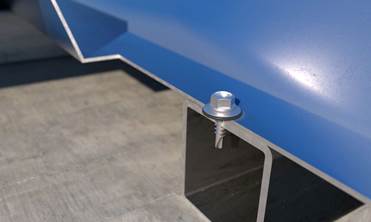
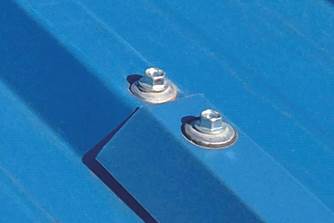
- Stainless steel washer with bonded EPDM
Where fixings are installed directly onto flat surfaces such as metal sheets, sandwich panels or structural profiles, a stainless steel washer with bonded EPDM, such as the ARVUL A2, is commonly used.
In these applications, the washer distributes the tightening load evenly while creating a watertight seal between the two materials, preventing water from penetrating through the fixing point.
The stainless steel body also provides excellent corrosion resistance while protecting the EPDM gasket against mechanical wear.
- Washers for double-thread hanger bolts
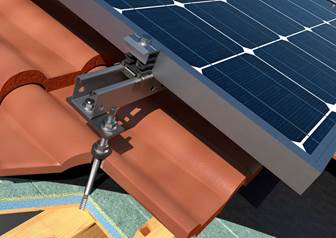
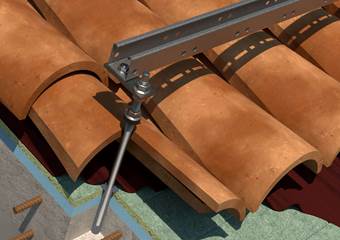
Where double-thread hanger bolts are used, the sealing solution must accommodate a different geometry.
In these cases, sealing washers such as ARS-P and ARS-S are used to seal the penetration where the hanger bolt passes through the roof, whether on flat or curved surfaces.
Their design allows the washer to conform to the roof surface while the hanger bolt is anchored to the supporting structure, ensuring reliable sealing even when the installation is subjected to movement caused by thermal expansion.
Butyl sealing tapes
Thanks to their excellent adhesion, butyl sealing tapes conform to minor surface irregularities, creating a continuous waterproof barrier between the roof and the mounting structure.
They also retain their properties over long periods of outdoor exposure and help reinforce the overall waterproof performance of the system.
They are particularly suitable for coplanar systems installed on metal roofs, where they help prevent water from penetrating between the mounting rail and the roof sheet.
When should a waterproof membrane be used?
EPDM sealing washers and butyl sealing tapes address most sealing requirements in photovoltaic installations. However, incorporating a waterproof membrane provides an additional level of protection that helps ensure long-term watertightness. Although its use is always recommended as a preventive measure, it becomes essential in certain applications.
This is particularly true for installations on tile or ceramic roofs, where roof penetrations are required to install the fixing system. During drilling, small cracks or microcracks may develop that are not immediately visible but can eventually become pathways for water ingress.
Using a waterproof membrane is also recommended when installing double-thread hanger bolts, as these penetrate the outer roofing layer to anchor into the underlying structure.
In many ways, a waterproof membrane provides an additional layer of protection against rain. Just as an umbrella offers good protection while a waterproof jacket provides an extra level of security, combining sealing accessories with a waterproof membrane delivers greater reliability under demanding conditions and extends the service life of the installation.
Within our range of solar fixing solutions, the MS-IS waterproof membrane, based on W-PROTEK technology, has been developed specifically to seal and waterproof the critical areas of photovoltaic installations.
Its hybrid formulation provides outstanding adhesion to commonly used materials including aluminium, steel, concrete, fibre cement, ceramic and timber, creating a continuous waterproof barrier that maintains both flexibility and adhesion even after years of outdoor exposure.
How does material quality affect the watertightness of a photovoltaic structure?
Watertightness is not determined solely by how well the installation is assembled on the day it is completed.
The real challenge is ensuring that waterproof performance is maintained for twenty or even thirty years. Throughout this period, components are continuously exposed to rain, humidity, solar radiation, extreme temperature changes, frost, wind and movement caused by the thermal expansion of the roof.
For this reason, using high-quality materials is an investment in durability.
Corrosion-resistant aluminium profiles, high-performance coated fasteners and stainless steel components for aggressive environments all help preserve both the structural integrity and the watertightness of the system throughout its service life.
Five mistakes that can cause leaks
Even when high-quality materials are used, poor installation practices can compromise the waterproof performance of the entire system.
These are some of the most common mistakes our technical team identifies during photovoltaic installations:
1. Overtightening sealing washers: applying excessive tightening torque can deform the EPDM gasket and reduce its sealing effectiveness.
2. Using accessories not designed for photovoltaic applications: components specifically developed for solar installations help maintain watertight performance throughout the entire service life of the system.
3. Failing to prepare the surface before sealing: before applying sealing tape or a waterproof membrane, the surface must be clean and free from dust, grease, mould, moss and any other contaminants that could reduce adhesion. This is particularly important on tile and ceramic roofs, where these residues are more common.
4. Choosing an unsuitable fixing system for the roof type: using a fixing solution intended for another application can compromise the sealing of the anchoring point and increase the risk of leaks.
5. Obstructing natural water drainage: poor positioning of the photovoltaic structure or cable routing can interfere with the roof’s natural drainage. When water remains trapped for extended periods, the likelihood of leaks increases and the waterproofing elements deteriorate more rapidly.
Watertightness is one of the most critical aspects of any rooftop photovoltaic installation. It does not depend on a single product, but on the combination of an appropriate fixing system, sealing accessories, high-quality materials and correct installation practices.
Using a complete system specifically designed for solar applications not only helps prevent leaks, but also reduces maintenance requirements, avoids costly repairs and maximises the service life of both the photovoltaic installation and the roof itself.
At INDEX, we develop a complete range of photovoltaic mounting solutions, including fixing systems, mounting structures, sealing accessories and waterproof membranes, providing the right solution for every roof type and every project.